
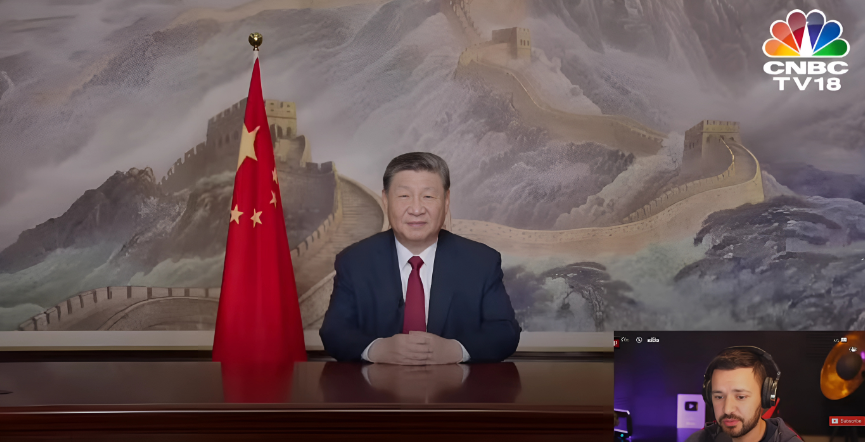
As 2024 comes to a close, the world witnesses a chilling proclamation from Chinese President Xi Jinping, who delivered a New Year’s Eve address signaling a stark warning: the unification of China and Taiwan is “inevitable,” even if achieved by force. This declaration not only heightens tensions in the Pacific but also raises concerns about its potential repercussions for the United States and global stability.
A Growing Military Presence
China has steadily ramped up its military operations around Taiwan, encircling the island with warships and fighter jets, holding joint drills, and maintaining an increasingly provocative stance. While these actions are framed as steps toward “peaceful unification,” the Taiwanese government and many international observers interpret them as preparations for conflict.
President Xi’s speech underscored China’s unyielding stance, declaring that “no one can sever our family bonds” and “no one can stop the historical trend of national reunification.” For Taiwan, which has long fought to maintain its independence, these words signal looming peril.
Cyber Threats and Strategic Calculations
Beyond military maneuvers, China has allegedly intensified cyberattacks on U.S. critical infrastructure, including breaches of the U.S. Treasury and telecommunications systems. Cybersecurity officials warn that these cyber armies are part of China’s strategy to weaken U.S. defenses in the event of a Taiwan conflict. The scale of these attacks, coupled with the vulnerabilities they expose, paints a concerning picture of preparedness—or lack thereof.
Experts like Gordon Chang have repeatedly emphasized that these actions signal more than posturing. “China is preparing to go to war,” he warns, citing evidence such as stockpiling grain, sanction-proofing its regime, and increasing military build-up. Chang also stresses the urgent need for the U.S. to strengthen its defenses and inform its citizens about the potential risks.
The Global Ripple Effect
China’s ambitions extend beyond Taiwan, as its alignment with nations like Russia and North Korea solidifies. Xi Jinping’s praise of Vladimir Putin as a “reliable partner” and the growing cooperation between these nations have amplified fears of a new geopolitical axis challenging the existing world order. With North Korea vowing tougher anti-U.S. policies and Russia issuing nuclear warnings, the global stage feels increasingly volatile.
As Xi Jinping emphasizes the “inevitability” of Taiwan’s unification, the stakes for the United States—a staunch ally of Taiwan—are clear. Any conflict in the Pacific could rapidly draw the U.S. into direct confrontation, with ramifications for global peace and economic stability.
What’s Next for 2025?
The coming year could be a turning point. With the U.S. potentially bolstering its military alliances and resources, including discussions around strategic locations like the Panama Canal and Greenland, the international community must grapple with how to deter escalation and maintain balance.
The stakes have never been higher. For Taiwan, the U.S., and the broader international community, 2025 looms as a year of uncertainty and potential conflict. Preparing for the challenges ahead will require decisive action, cooperation, and vigilance.
