
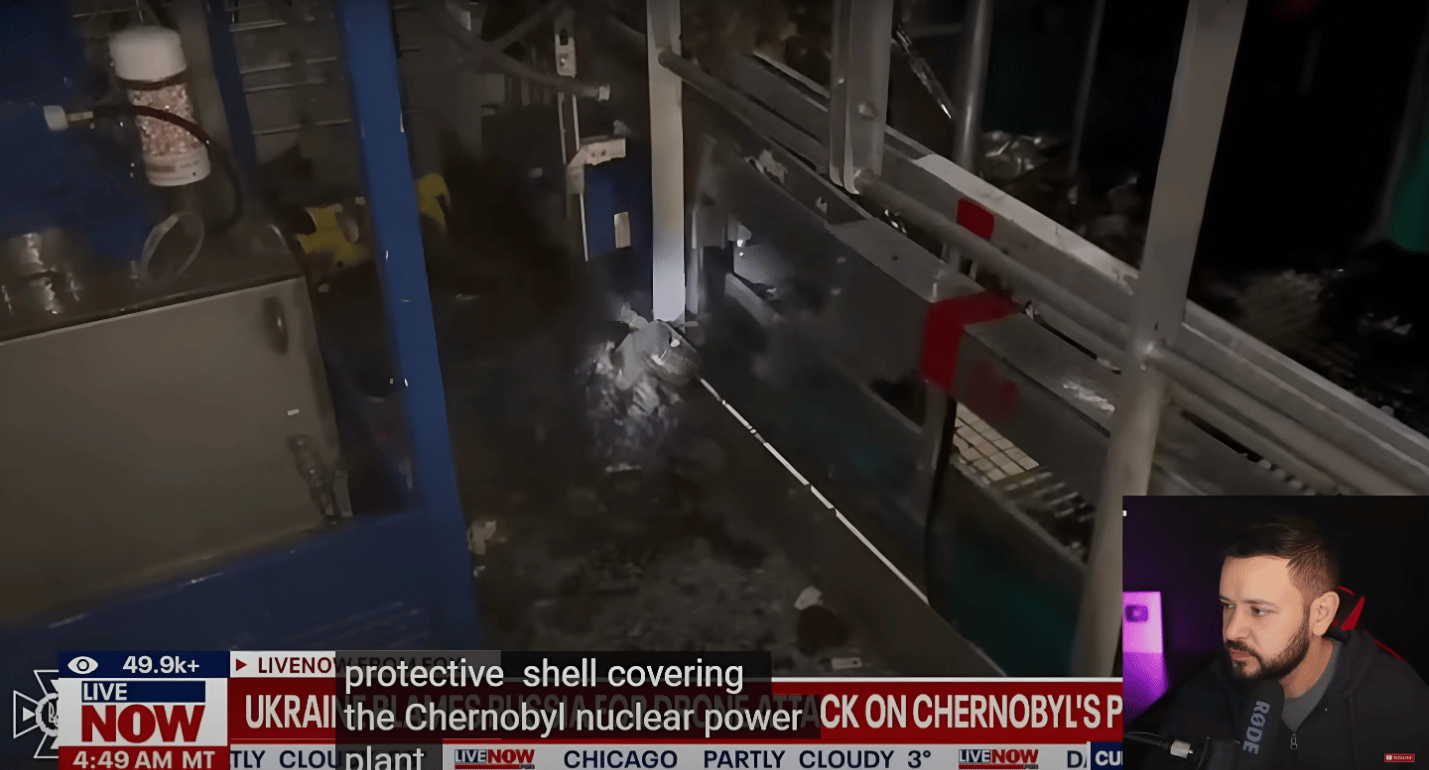
Tensions between global nuclear powers reached new heights today as the United States announced plans for an intercontinental ballistic missile (ICBM) launch in Southern California as part of a “nuclear readiness drill.” This development comes just hours after a drone strike damaged the protective shell at Ukraine’s Chernobyl nuclear plant—an attack that has sparked international concern and created new roadblocks in the fledgling peace process.
Chernobyl Drone Attack Raises Alarm
Early Friday morning, a drone armed with a high-explosive warhead struck the New Safe Confinement (NSC) structure at the Chernobyl nuclear power plant, punching a hole through the protective outer shell and starting a fire. The NSC, a massive 40,000-ton steel and concrete structure completed in 2016, was built to contain radiation from the site of the world’s worst nuclear disaster that occurred in 1986.
Ukrainian President Volodymyr Zelensky immediately attributed the attack to Russia, calling it a “very clear greeting from Putin” and a “terrorist threat to the entire world.” According to Ukrainian officials, the damage to the shelter is “significant,” though the International Atomic Energy Agency (IAEA) has confirmed that radiation levels remain normal and stable.
The Kremlin has denied responsibility, with spokesperson Dmitri Peskov suggesting the strike was a “false flag attack staged by Ukraine” intended to derail potential negotiations between Russian President Vladimir Putin and US President Donald Trump.
US Military Flexes Nuclear Muscle
Against this backdrop of escalating accusations, the US Air Force announced plans to launch an unarmed Minuteman 3 ICBM from Vandenberg Space Force Base in California. The test, scheduled for February 18-19 between 11:01 p.m. and 5:01 a.m. Pacific time, is described by Air Force Global Strike Command as a demonstration of “the readiness of the US nuclear forces” and a measure to “provide confidence in the lethality and effectiveness of the nation’s nuclear deterrent.”
Military officials insist the test was planned years in advance and is consistent with routine operations to verify the “effectiveness, readiness, and accuracy of the weapons system.” Nevertheless, the timing of the demonstration has raised eyebrows given the rapidly deteriorating situation in Eastern Europe.
Peace Talks in Jeopardy
The drone strike on Chernobyl occurred just six hours after President Trump announced intentions to meet with Putin to negotiate an end to the Russia-Ukraine conflict. Trump’s initiative, which appeared to sideline both Zelensky and European governments from the peace process, now hangs in the balance.
Estonian officials have already declared any previous peace talks “obsolete and off the table,” while Zelensky has stated he would only meet with Putin after a common plan is negotiated with Trump. The Ukrainian president also emphasized that his country requires security guarantees before engaging in any talks to end the war.
Cold War Map Resurfaces
Adding to the growing nuclear anxiety, a Cold War-era map has resurfaced showing the predicted impact of a hypothetical nuclear attack on the United States. The map, created by scientists from Princeton University in 1986, illustrates regions where up to 75% of the population would perish in a nuclear strike on American missile silos.
The study assumed that each of the 1,116 US missile silos and launch control centers would be struck by 2.5-megaton warheads, with radioactive fallout carried by west-to-east winds across large portions of the country. The academics warned that in the most severely affected areas, where radiation levels would exceed 3,500 rads, “more than three-quarters of the population would not survive.”
Strategic Implications
Military analysts note that the Minuteman weapon system, a critical component of America’s strategic defense, consists of 400 missiles housed in silos across Wyoming, Montana, and North Dakota. These installations would likely be primary targets in any nuclear exchange.
The resurging interest in nuclear strike scenarios comes at a time when nine nations possess nuclear capabilities: the United States, Russia, China, the United Kingdom, France, Pakistan, India, North Korea, and presumably Israel (though Israeli officials have never publicly acknowledged their nuclear arsenal).
